Coxe Brothers and Co. began mining at Drifton in 1865. An early name for the Drifton mine was Cross Creek Colliery. Later there were Drifton Colliery
No. 1 and No. 2. Coxe Brothers was somewhat progressive for a coal company of their era, and they made constant improvements in the Drifton mines. In 1879, Eckley Coxe (who actually lived at
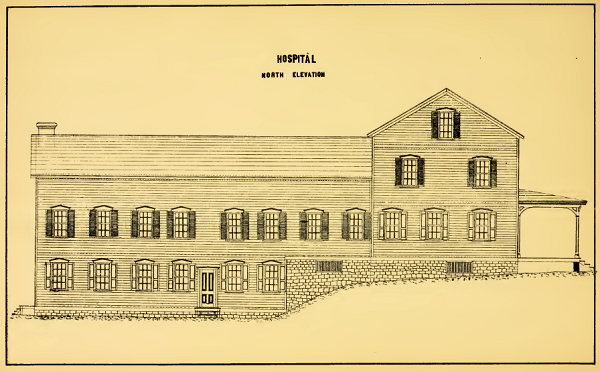
Drifton) established a school at Drifton for men and boys to learn technical aspects of coal mining. Coxe Brothers built a hospital at Drifton in 1881, and an "iron breaker" in 1890. This long-lived
company mined anthracite coal at Drifton all the way until 1938. For the rest of the Drifton mines' life, it was leased to Jeddo Highland Coal Co., who operated it at least into the late 1940s. Also, Greenwood Mining Co. operated the
Drifton No. 9 mine simultaneously in the 1940s. Mining at Drifton was originally in the Buck Mountain seam. Later mining moved into the Mammoth and Wharton seams.
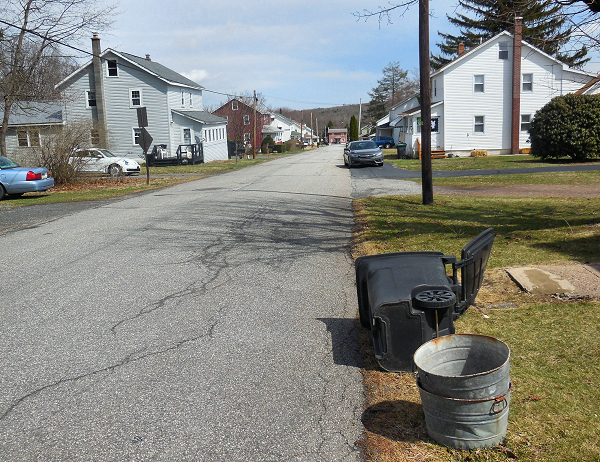
April 2025 image by author
Coal ash buckets that have been set out for the garbage man. The Drifton "patch" is in the background.
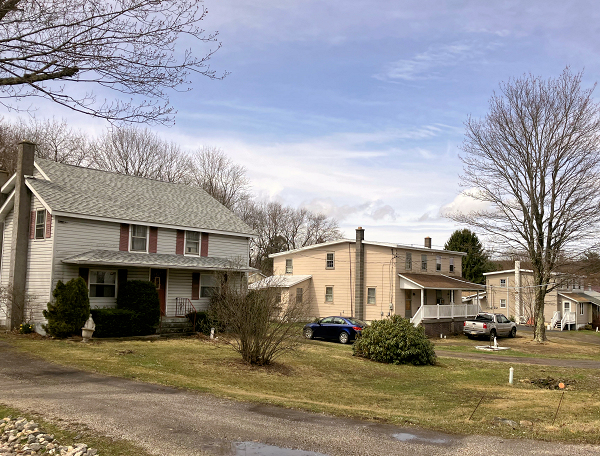
April 2025 image by author
Former company houses.
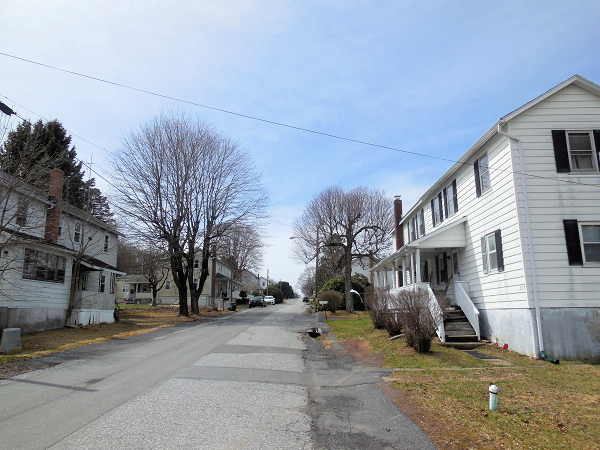
April 2025 image by author
Houses on Coal Miner Drive. Another street is named after Sophia Coxe.
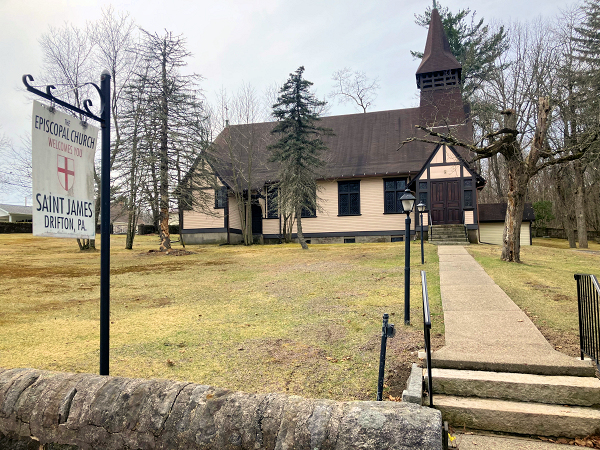
April 2025 image by author
Saint James Episcopal Church.
April 2025 image by author
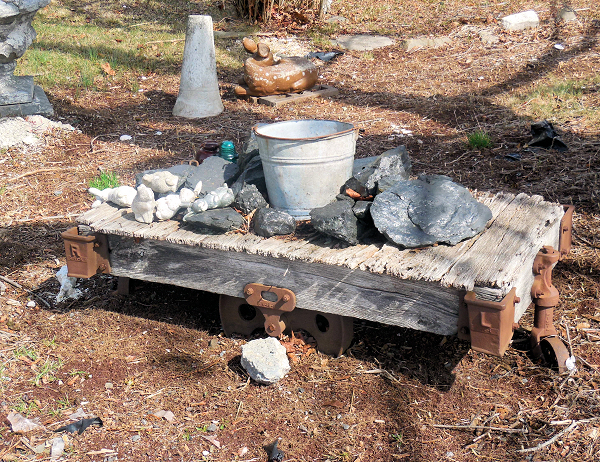
In a front yard, I found what looked like a tribute to Drifton's industrial past.
Architectural drawing of the hospital for injured coal miners that Coxe Brothers constructed
at Drifton in 1881.
12 Year Old Boy Crushed
"Daniel Gallagher, boy, aged 12, was instantly
killed at Cross Creek colliery, April 12, 1877, by being crushed by the
breaker rollers. At the time of the occurrence the breaker men had gone
to the foot of the plane to put a car on the track, and during the interval
the boys got playing. The deceased went up to the second platform, and
by crossing the chute, which conveyed the coal to the 'Ponney rollers,'
his foot slipped, precipitating him into the rolls, and was not observed till
he was half way through the screen. The necessary preventive to obviate
such disaster had been neglected being put in its place when the men
left their work to put the car on the track. Owing to the demand for different sizes of coal, they had to remove or enlarge the hole leading into
the rolls, but in order to avoid any such accident, Mr. Coxe had strictly
forbidden boys being employed anywhere near exposed machinery,whereby
the same could not be fenced off."