Eckley, PA - A Pennsylvania "Patch" Suspended In Time
Sharpe, Leisenring and Company opened the colliery and company town at Eckley in 1854, although it was originally named Fillmore. This company
evolved into Sharp, Weiss & Co. Mining was originally in the Buck Mountain seam. In 1873, they operated two breakers and several portals for men, coal, and pumping mine water. As the 19th century went on, J. Leisenring & Co. operated the anthracite coal mines at Eckley, then Cross Creek Coal Co. By 1900, Coxe Brothers & Co. were the operators at Eckley. Under Coxe, the Wharton seam was also opened. The Coxe Brothers mined coal at
Eckley until 1940. The last operator of the Eckley mines and breaker was Jeddo-Highland Coal Co. There was also a Greenwood Coal Co. operating an Eckley No. 7 mine in the 1940s. The last time the Eckley
name appeared in state mining records was 1947. A Jeddo-Highland map for Eckley Colliery has its latest revision date as October 1949.
At that point, Eckley could look to the future through the same lens as other nearby "patch towns": Houses sold off to individuals, company store closing, breaker demolished, and many more decades of being surrounded by strip mining and endless remining of culm banks. But a funny thing happened in 1968. Film makers found the forlorn but intact village sitting at the eastern edge of the coal field to be an ideal setting for their movie about the Molly McGuires.
A replica breaker was constructed as a prop, as was a company store. The film, starring Sean Connery, was released in 1970. Shortly thereafter, the Pennsylvania Historical and Museum Commission became the owner of Eckley. A sign was put out on I-81, and a museum constructed at the end of town. Now the town is preserved and maintained as a tourist attraction.
April 2025 image by author
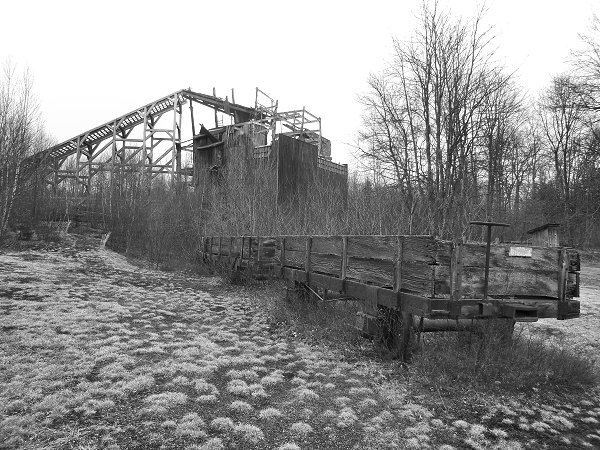
The replica breaker and coal cars built in 1968 at Eckley.
April 2025 image by author
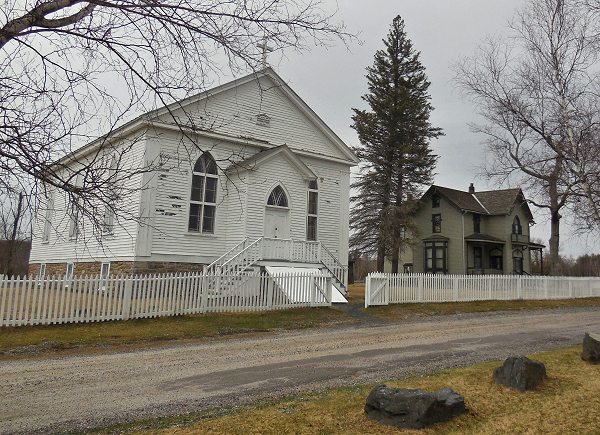
Former Immaculate Conception Roman Catholic church and rectory. When it was built in 1861, the first parishioners were
mostly Irish Catholics. Several decades later they were probably Slavic. The church declined and became a mission church of another parish in the 1930s, and was finally closed in 1958.
April 2025 image by author
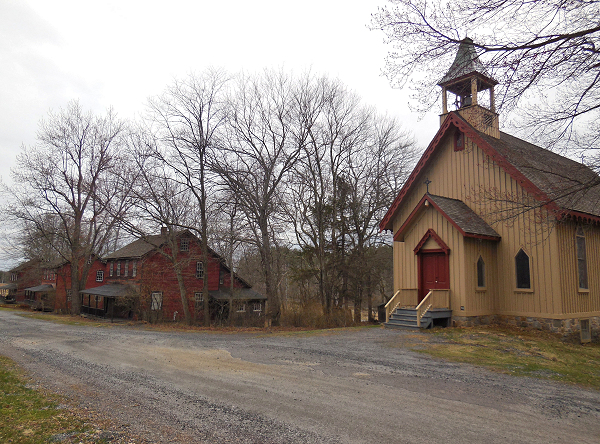
On the right is the former Episcopal church, and on the left are a few duplex company houses. One of them is still inhabited. I
was suprised to find permanent residents during my visit to Eckley. However, it doesn't suprise me that the Episcopal church is at the end of town where management lived.
April 2025 image by author
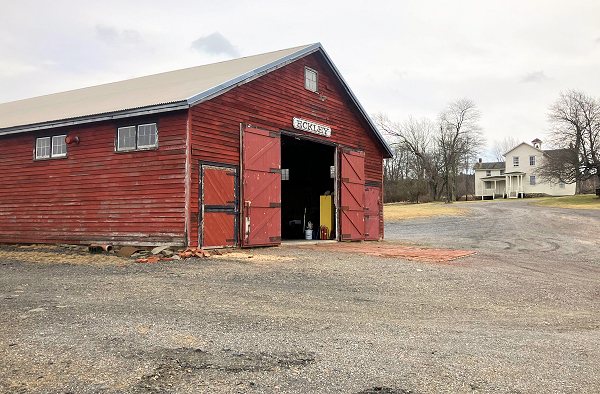
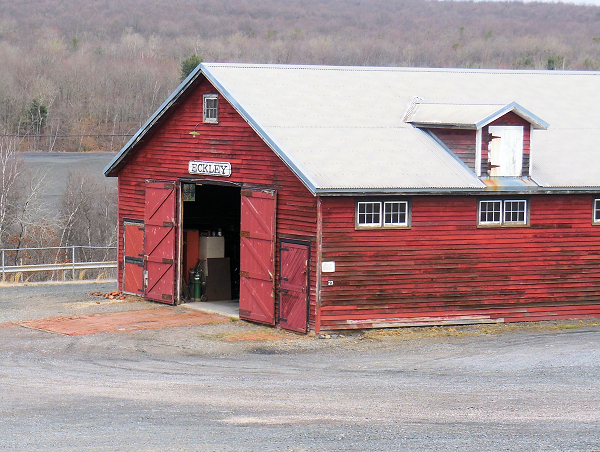
I could not find actual remaining buildings from the Eckley coal mines. However, this replica of a mule stable was built in 1987 on the site where a saw mill was located.
April 2025 image by author
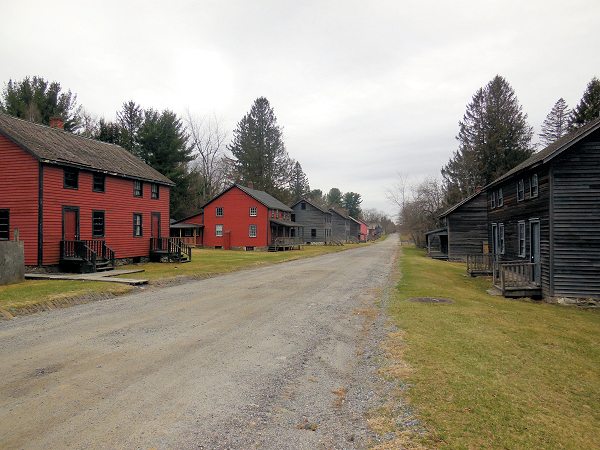
Duplex company houses lining both sides of Eckley's main street. This style of two-family house is known as the Pennsylvania Miners' House, and is synonymous
with Pennsylvania coal towns in both the anthracite and bituminous fields. When veterans of the coal industry went south in search of new coal fields, they still at times built this style of house in their new
company towns, such as Barrackville and Gary, W.Va.
April 2025 image by author
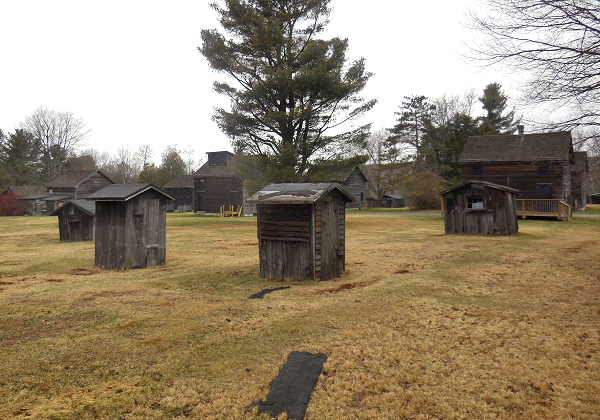
Many of the outhouses (called "privies" in Pennsylvania) and sheds that were erected over the years are still in place.
April 2025 image by author
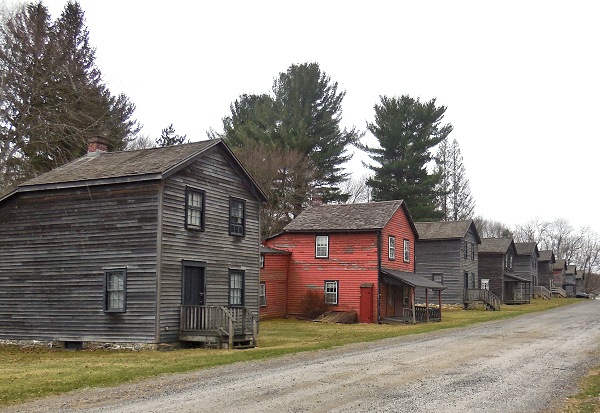
Eckley single family company houses. There was once a parallel street of company houses called South Street. These houses were gradually
demolished in the 1930s, '40s and '50s and the area was strip mined. Today, only a remnant of South Street remains.
April 2025 image by author
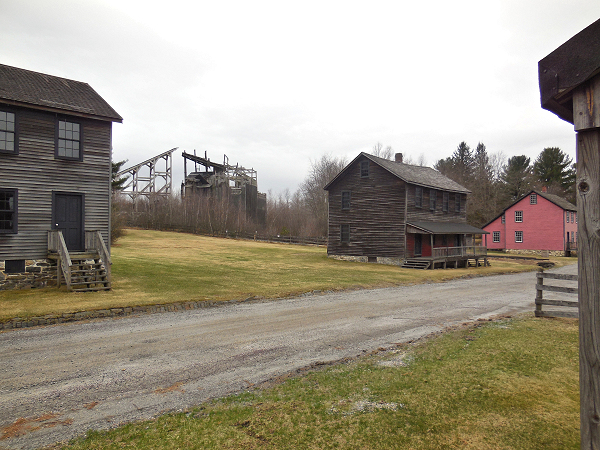
The Eckley breaker as viewed from the residential area.
April 2025 image by author
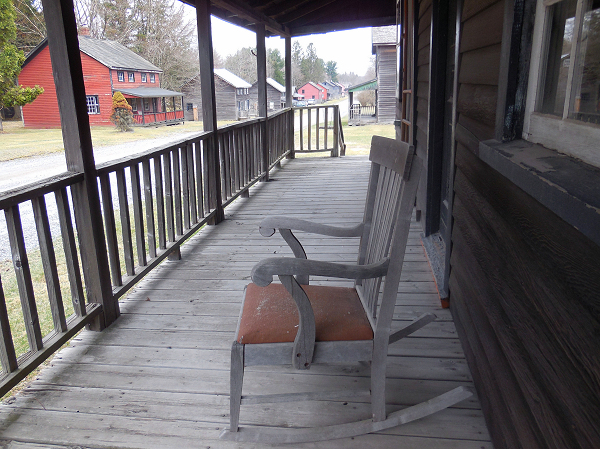
The styles of front porches vary at Eckley from shared porch for the entire house, such as this example, to twin uncovered stoops.
April 2025 image by author
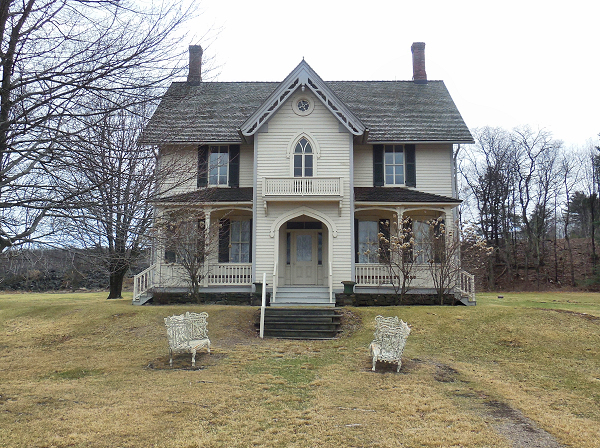
The mine owner's house was and is the nicest home at Eckley.
April 2025 image by author