Lytle Colliery - Tweedsville, Pennsylvania
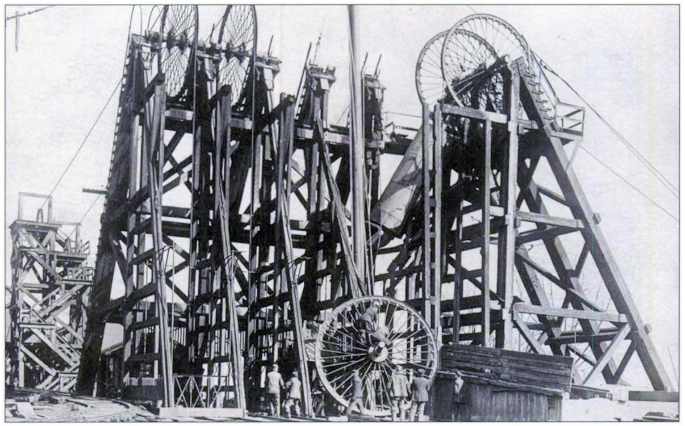
Circa 1890, J. Stickney & Co. purchased land near Primrose, PA that they would lease to Lytle Coal Co., a subsidiary of the Pennsylvania Railroad. That railroad had to build a new rail branch to reach the new mine. Lytle built a new breaker, began extensive underground tunnelling and shaft sinking, and dewatering of older adjacent coal mines that were flooded. A miscalculation as to the extent of the older flooded mines caused an underground blowout into the Lytle works. This caused the death of ten Lytle Colliery employees. After overcoming these obstacles, Lytle Colliery coal production began in 1894. Coal production grew steadily over the years until it reached very respectable volumes in the early 19002. However, there was so much water to be pumped out that at least some of it was hoised up the shaft in tanks. Lytle Coal Company continually updated their facilities with new slopes, shafts, fans, and breaker upgrades. Some of the shafts were very deep (nearly 2000'). No. 2 breaker was opened in 1901. A miners' strike in 1902 caused much of the underground workings to refill with water. Lytle Coal Co. spent the next year removing water and repairing damage. After this, Lytle Colliery could look forward to several decades of strong anthracite coal production. The Tracy, Diamond, Orchard, Primrose, Holmes, Four-Foot, White Ash (top split of the Mammoth) , Black Heath (bottom split of the Mammoth), Skidmore, and Buck Mountain seams were mined. At some point, Susquehanna Collieries name became associated with Lytle Coal Co. Mining had ceased by the 1940s, but a company named Lytle Concentrated Coal Co. was listed in Pennsylvania mining records in the early 1950s. Perhaps they were still operating one of the old Lytle breakers to process coal from small, local operators.